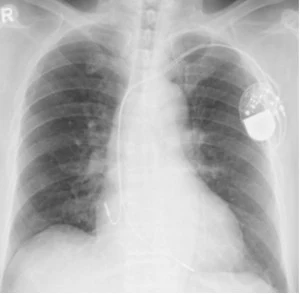
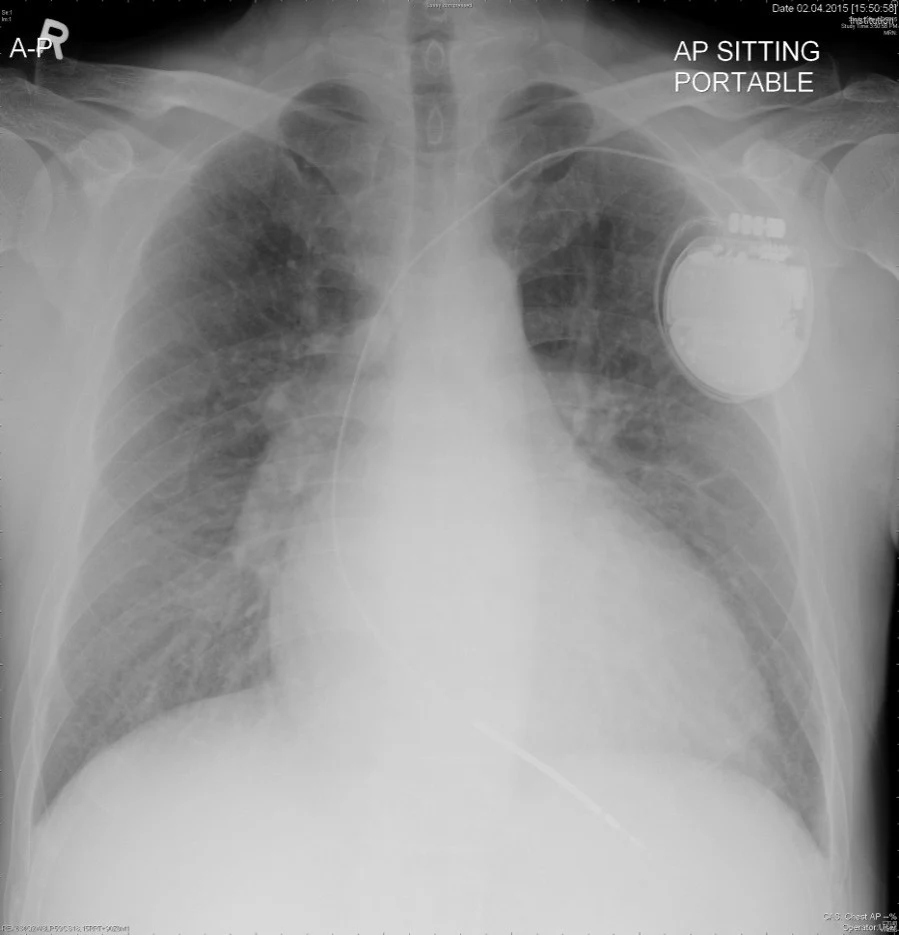
Implantable cardiac devices are small devices placed in the body, usually via a vein to the heart, that help to monitor and treat heart rhythm abnormalities and improve heart function. They include pacemakers for slow heart beats, defibrillators for fast ventricular tachycardia/fibrillation and resynchronisation devices.
Transvenous pacemaker
01Why It’s Done
Dr Lee may recommend this for patients with:
Slow heart rates (treated with a permanent pacemaker)
Risk of dangerous fast ventricular rhythms (treated with an implantable defibrillator, ICD)
Heart failure and left bundle branch block (treated with cardiac resynchronisation therapy, CRT)
02How It Works
The device is implanted under the skin, usually on the left side of the chest, under local anaesthetic and sedation.
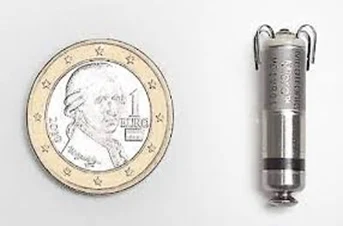
One or more fine leads connect the device via vein to the heart (modern completely leadless and extra-thoracic subcutaneous options are also available).
Almost all pacemakers now utilize conduction system pacing to reduce the risk of pacing induced heart failure.
The device is programmed and tested before you go home.
Transvenous ICDLeadless pacemaker
03Duration, Recovery & What To Expect
The procedure takes one to two hours, and is done under local anesthesia and sedation for patient's comfort. After an overnight stay, checks are done to ensure normal device function before patients are discharged. You will receive guidance on arm movement, wound care and device follow-up.