Coronary angioplasty, also known as Percutaneous Coronary Intervention (PCI), is a minimally invasive procedure used to treat coronary artery disease and angina, the narrowing of the coronary arteries that supply the heart muscle.
01Why It’s Done
Dr Lee may recommend this for patients with:
Treating significant narrowing of a coronary artery
Relieving angina
Restoring blood flow during or after a heart attack
02How It Works
A thin, flexible catheter is inserted into a blood vessel in the wrist or groin and guided to the heart.
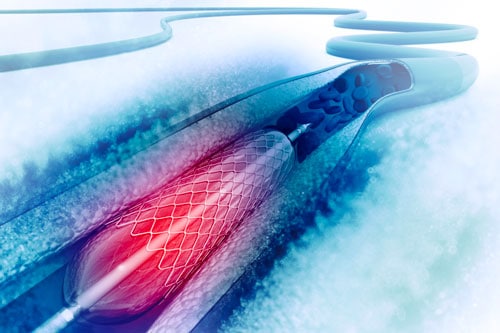
At the narrowing, a small balloon on the catheter tip is inflated to widen the artery.
A stent is usually expanded and left in place to support the artery and prevent re-narrowing.
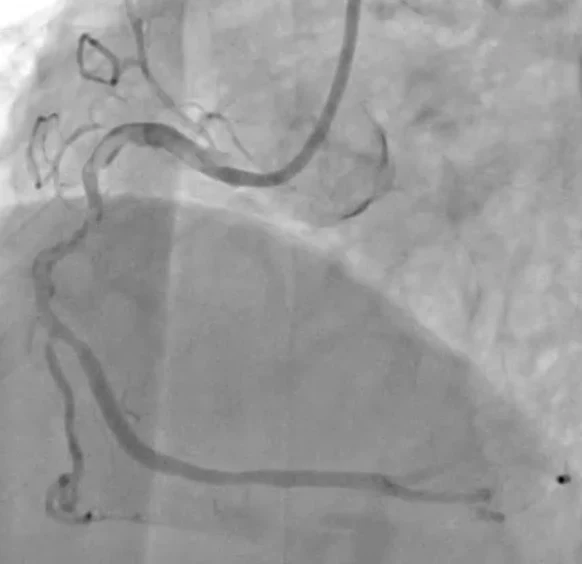
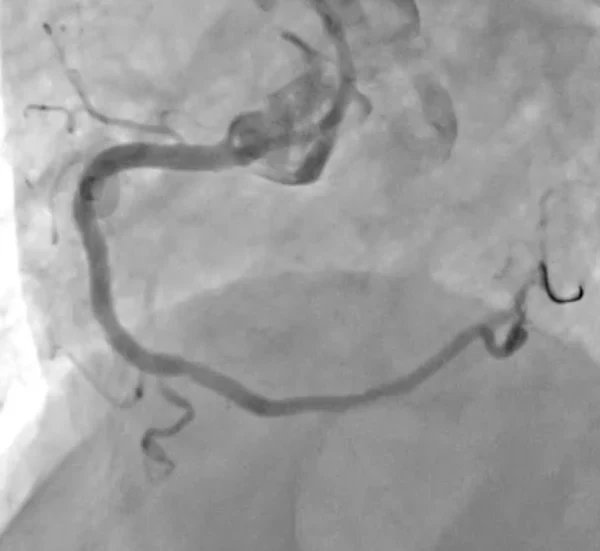
Coronary angiogram showing significant narrowingCoronary angiogram showing post angioplasty/stent
03Duration, Recovery & What To Expect
The procedure is done under local anaesthesia and sedation, and lasts one to two hours. It is well tolerated and recovery is generally quick. Most patients are observed overnight and discharged on the following day. Patients are given clear guidance on activity, medication and follow-up.
04Performed By Dr Lee Chee Wan and experienced colleagues
No, it is a minimally invasive key hole, catheter-based procedure that does not require opening the chest.
What is a stent?
A stent is a small alloy metals mesh tube left inside the artery to keep it open and maintain healthy blood flow. It is usually drug coated for better outcome.
Ready to take the next step?
Book a consultation with Dr Lee Chee Wan to discuss this procedure and your heart health.