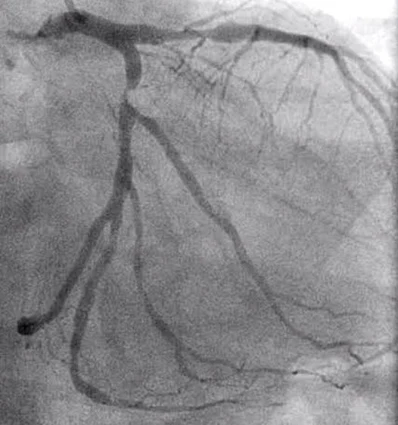
A coronary angiogram is an invasive test that detects problems in the coronary arteries in fine detail. It is a procedure with minimal discomfort, quick recovery and a low risk of complications. If a significant blockage is found, treatment can often be carried out in the same session.
01Why It’s Done
Dr Lee may recommend this for patients with:
Confirming or excluding significant coronary artery disease
Investigating angina not resolved by other tests
Planning treatment such as angioplasty, bypass or valve surgery
02How It Works
A thin tube (catheter) is inserted into an artery in wrist or groin under local anaesthetic and sedation.
It is gently guided up to the heart.
A dye is injected through the catheter so the arteries show up clearly on X-ray.
If needed, a coronary angioplasty (PCI) can be performed in the same session.
03Duration, Recovery & What To Expect
Coronary angiogram takes around 10 to 20 minutes. Most patients recover quickly. You will be observed for a few hours and given specific aftercare instructions for the puncture site; ie. can be discharged on the same day. If the patient proceeds to have angioplasty/stent, then there will be an overnight stay.