Catheter ablation is a procedure used to treat heart rhythm problems by selectively treating the small areas of heart tissue causing the abnormality. It can significantly improve, and for some conditions cure, arrhythmias such as atrial fibrillation, atrial flutter, ectopics and supraventricular and ventricular tachycardia.
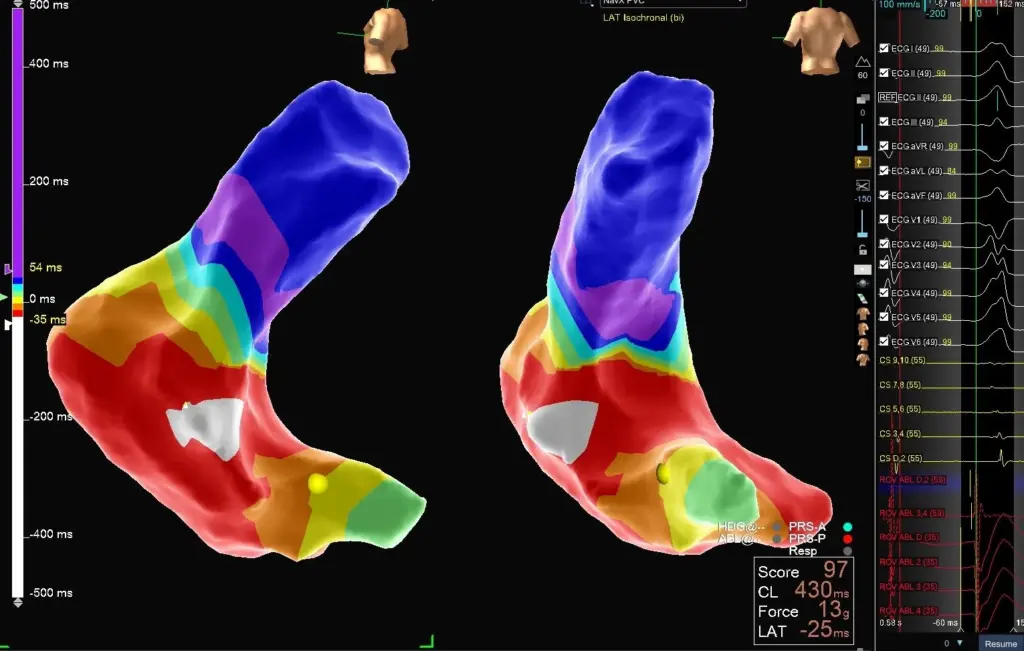
Outflow tract PVC ablation
01Why It’s Done
Dr Lee may recommend this for patients with:
Atrial fibrillation and atrial flutter
Supraventricular tachycardia (SVT)
Frequent ectopic beats and ventricular tachycardia
02How It Works
Thin catheters are threaded into the heart through small punctures in the groin (usually vein but sometimes artery)
The area causing the abnormal rhythm is precisely mapped using 3D electroanatomical mapping.
Radiofrequency energy (heat) or cryoablation (cold) or pulsed field ablation (short electrical pulses) is used to treat the target tissue.
The normal rhythm pathway is restored.
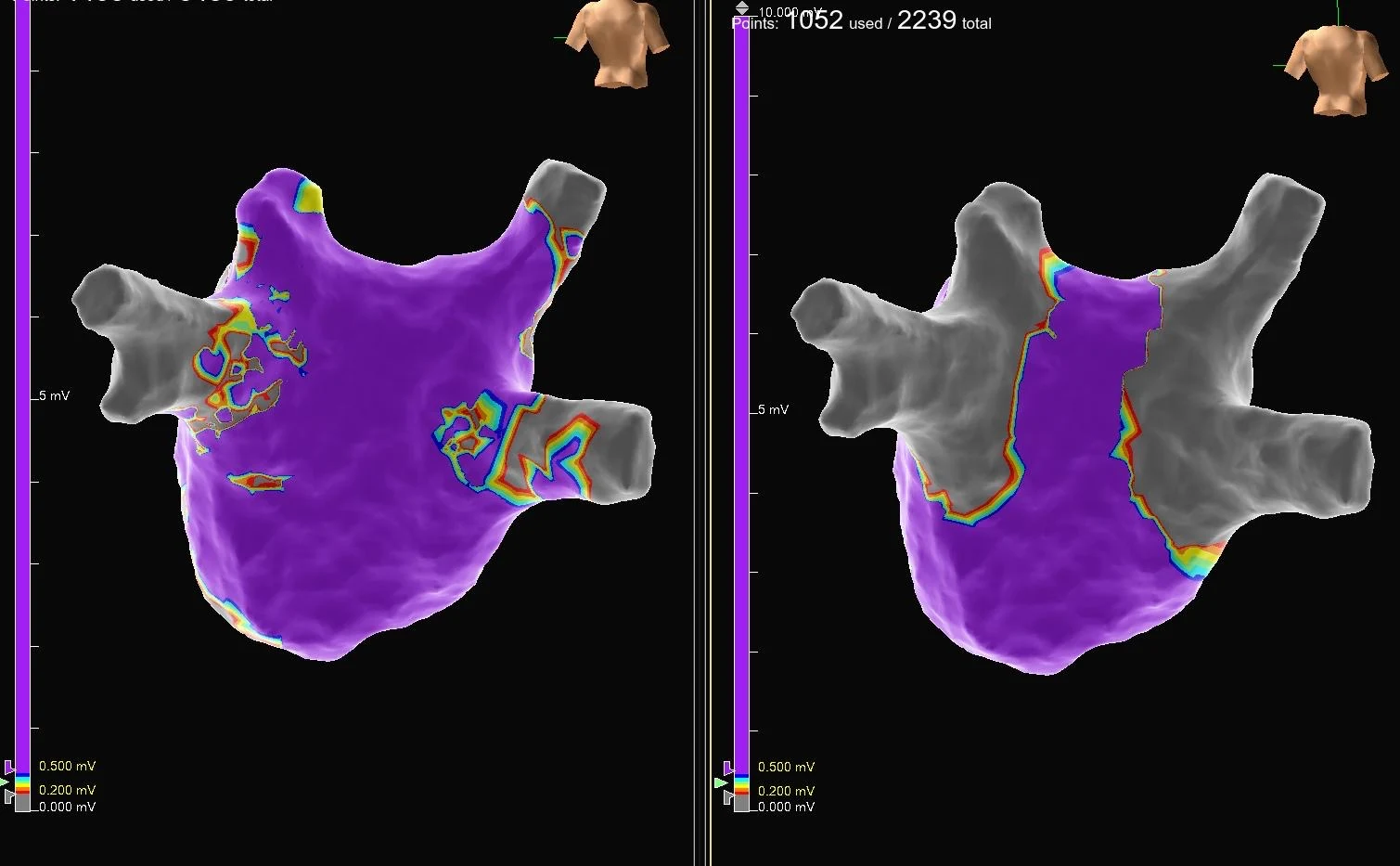
Pre and post pulmonary vein isolation in AF ablation
03Duration, Recovery & What To Expect
The procedure is done with either sedation or general anesthesia and takes between two to three hours. Most patients stay overnight for observation and recover within a few days. Dr Lee will provide detailed individualised treatment plan and aftercare advice.
For conditions such as SVT and atrial flutter, ablation can offer a long-term cure. For atrial fibrillation, it is often highly effective especially if performed early although some patients may require more than one procedure.
Is catheter ablation major surgery?
No. It is a minimally invasive, catheter-based key hole procedure; the chest is not opened.
Ready to take the next step?
Book a consultation with Dr Lee Chee Wan to discuss this procedure and your heart health.